
A personal essay by yours truly.
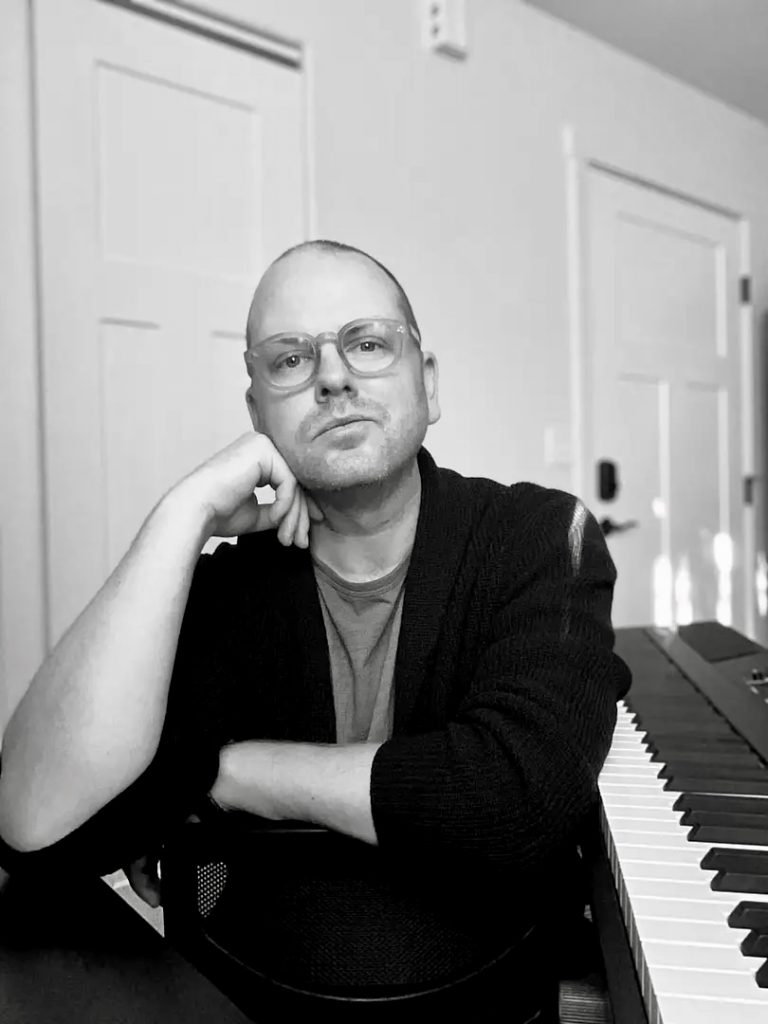
There was a time when Philadelphia knew exactly where to find that piano guy.
For nearly four years, night after night, I sat behind the piano at the spectacular—and ultimately ill-fated—Walnut Street Supper Club. As resident music director and headliner, I had the extraordinary privilege of helping establish the room as one of the city’s premier destinations for cabaret and live music. Broadway veterans, jazz artists, local performers, and curious first-timers all found their way into the intimate jewel box tucked just off Walnut Street, where the piano wasn’t accompaniment—it was the beating heart of the room.
I would capture lightning in a bottle twice, finding another home on my nights off from the Club downstairs at the legendary Tavern on Camac. Monday nights. Every night: actors fresh from curtain calls, bartenders ending their shifts, musicians, night owls, and devoted regulars squeezed into the piano bar to sing, laugh, request impossible songs, and forget for a few hours that morning was coming, whether we liked it or not. Broadway standards collided with Billy Joel and Joni Mitchell. New songs were tested. Old songs found new life. The room became less a performance venue than a gathering place.
And then, almost as suddenly as I’d become part of Philadelphia’s musical fabric, I disappeared.
People still ask me what happened.
The easy answer is that life happened.
The longer answer is that careers—particularly artistic ones—rarely unfold in straight lines. They meander. They surprise us. They ask us to surrender identities we’ve carefully built so something richer has room to emerge.
I traded the nightclub for the classroom.
I found myself leading university musical theatre programs, directing productions, coaching young actors, teaching voice, writing, composing, and discovering that I loved helping artists find their own voices just as much as I loved using my own. Along the way, I was fortunate enough to work with remarkable students, collaborate with extraordinary professionals, and eventually find myself directing the Junior Cabaret Fellows at the Eugene O’Neill Theater Center, where some of the country’s most exciting young performers spend two remarkable weeks discovering who they are as artists.
Somewhere along the way, I stopped asking whether I was still a performer.
I simply became an artist who performed when the story required it.
Life, however, has a funny way of insisting we revisit unfinished conversations.
Earlier this summer, I underwent surgery on my left hand after an injury that threatens something I had quietly taken for granted for decades: the ability to play the piano.
The recovery has been slow, humbling, and uncertain. Every note now carries weight. Every hour at the keyboard feels less like rehearsal and more like gratitude.
Ironically, it has made me want to perform again.
Not because I miss applause.
Because I miss communion.
Cabaret has always been one of the few art forms where performer and audience agree to meet each other halfway. There are no costumes to hide behind. No scenery. No orchestra separating the room. Just stories, songs, silence, and trust.
Perhaps that’s what I was searching for all along.
The years away have changed me. They’ve made me a better human and artist, certainly, but more importantly they’ve made me a better listener. I’ve lived enough life now to understand that every audience is carrying something invisible into the room. Joy. Loss. Fear. Hope. Regret. Celebration. The songs haven’t changed nearly as much as I have.
So yes.
The piano guy is — slowly — working his way back to you.
Only now, he has fewer answers and better questions.
The voice has a little more gravel. The stories have more scars. The humor is darker. The optimism, oddly enough, is stronger. There are songs by Jason Robert Brown and John Bucchino that suddenly make terrifying sense. Billy Joel still sneaks into the evening. So do Stephen Sondheim, Carly Simon, Joni Mitchell, and a few originals that have waited years to find their audience.
I’m not interested in recreating what once was.
Nostalgia is a lovely place to visit, but a terrible place to live.
Instead, I’m interested in something rarer: what happens when an artist returns home carrying twenty years of living in his back pocket.
Philadelphia gave me my artistic adulthood. It taught me that audiences reward honesty more than polish, vulnerability more than perfection. It taught me that a piano bar can become a sanctuary and that strangers can become a community simply by singing the same chorus together.
I’ve missed that.
Maybe you’ve missed it, too.
So what happened to the piano guy.
He became a teacher.
A director.
A writer.
A mentor.
A survivor.
And somewhere along the way, after all the detours, I am finding my way back to the bench.
Turns out, the songs were waiting for me all along.